International relations, Russian affairs
gilbertdoctorow.com, besucht am 11. September 2024, 12:40 Uhr
(unser Kommentar vorab: Als Information zur Kenntnisnahme, wobei für uns das kriegerische Geschehen, wie z. B. in der Ukraine sowie in Israel, Palästina und sonstwo, keinerlei Zustimmung bzw. Rechtfertigung erhält)
Friends, countrymen, lend me your ears…
I cannot say how close we are to midnight on the nuclear war watch. But a Third World War fought at least initially with conventional weapons is now just days, at most weeks away.
I look at what my peers are saying on the most watched youtube channels, and they seem conforted that the Ukraine war is unsustainable for Zelensky’s army given the ongoing massacre of the forces they deployed in their Kursk gambit, today said to be over 10,000 men dead or grievously wounded. Meanwhile the Russian offensive in Donbass is reported both by Russians and by Western media to be accelerating, with more towns being captured each day and the number of square kilometers of Ukrainian territory ‘liberated’ there in the past month already roughly matching the 1,000 that Ukrainian elite forces captured in Russia’s Kursk oblast over the same period. Of course, these two conquests are incomparable: the Ukrainians have a tenuous hold on land they cannot fortify so as to keep given that their supply lines from the border are under constant deadly attack from the air and from Russian artillery, whereas the Russian advance along the Donbass battle lines is pulverizing long standing Ukrainian fortified positions and is about to totally disrupt the logistics that permit the Ukrainian forces to stay in the Donbass.
These same peers have highlighted the destruction of Ukraine’s best present and future cadres in electronic warfare by Russia’s missile strike this past week on the military communications institute in Poltava which is today said to have killed 700 Ukrainian and NATO personnel.
However, this seeming turning point in Russia’s favor is, as we speak, setting the stage for one further absolutely desperate and reckless act by the Biden administration to deprive Russia of its well earned victory by escalating the conflict to a world war.
What I have in mind is the near certainty that the United States and Britain have just agreed to give the Zelensky regime permission to use the long-range missiles which have been delivered to Ukraine, certainly including Storm Shadow and likely also the 1500 km range stealth missile known as JASSM to strike deep into the Russian heartland, and so ‘to bring the war to Russia’ as the Zelensky gang put it.
That is the sense of the trip this week by Secretary of State Blinken to Kiev and of the visit to the White House on Friday by British Prime Minister Starmer.
Collective Biden is doing this in the full knowledge that the Russians have issued direct threats of attack on the United States and other countries involved in strikes on its heartland using such Western supplied and directed weapons. However patient and averse to a hot war with NATO President Putin may be, he will have no choice but to rise to the challenge.
Meanwhile, peers who know a great deal about current affairs in the Middle East, in particular former British diplomat Alastair Crooke , have in their latest interviews on youtube said flatly that the United States has given Israel the go-ahead to launch a full-blown war on Lebanon. The nod from Washington was expressed by the reminder to Netanyahu that the aircraft carriers and other U.S. vessels now stationed in the Eastern Mediterranean cannot remain there indefinitely, so if he has something to do, he should proceed without delay.
Hence the Israeli prime minister’s public directive to the IDF a day ago to move on Lebanon. Should this happen, the tinderbox that is the Middle East today may well catch fire. The interested parties in countering the atrocities that Israel has been committing in Gaza and most recently also in the West Bank now take in even very moderate and restrained Jordan, as well as Turkey and Egypt. Of course; it will be very difficult for Iran to stay out of the conflict, which in one way or another will also bring in Iran’s newly declared strategic partner or ally, Russia.
In this way a presently localized conflict in the Middle East can in a flash become a regional war that in a further flash becomes a second front to the war between the United States and Russia which I foretold above when speaking about Ukraine.
These considerations of what may well happen in the immediate days ahead cannot bring joy to anyone. There will be no победа (victory) or слава (glory) for any of the parties to the coming conflagration. Only massive destruction and loss of life.
*Collective Biden is the term which Russian talk show hosts have applied to the US leadership given that the presidency assumed a collective form when the physical Joe Biden slipped into deep senility this past couple of years.
©Gilbert Doctorow, 2024
Translation below into German (Andreas Mylaeus)
Die wahnsinnige Rücksichtslosigkeit des kollektiven Biden*
Freunde, Landsleute, leiht mir eure Ohren…
Ich kann nicht sagen, wie nah wir an Mitternacht auf der Atomkriegsuhr sind. Aber ein Dritter Weltkrieg, der zumindest anfangs mit konventionellen Waffen geführt wird, ist nur noch Tage, höchstens Wochen entfernt.
Ich schaue mir an, was meine Kollegen auf den meistgesehenen Youtube-Kanälen sagen, und sie scheinen sich einig zu sein, dass der Krieg in der Ukraine für Zelenskis Armee unhaltbar ist, wenn man das anhaltende Massaker an den Truppen betrachtet, die sie bei ihrem Kursk-Gambit eingesetzt haben – heute sollen über 10.000 Männer tot oder schwer verwundet sein. In der Zwischenzeit wird die russische Offensive im Donbass sowohl von russischen als auch von westlichen Medien als beschleunigt bezeichnet, wobei jeden Tag weitere Städte erobert werden und die Zahl der Quadratkilometer ukrainischen Territoriums, die dort im vergangenen Monat „befreit“ wurden, bereits in etwa der Zahl von 1.000 entspricht, die ukrainische Elitetruppen im gleichen Zeitraum im russischen Kursk erobert haben. Natürlich sind diese beiden Eroberungen nicht miteinander vergleichbar: Die Ukrainer haben nur einen schwachen Halt in einem Gebiet, das sie nicht befestigen können, da ihre Nachschublinien von der Grenze aus unter ständigem tödlichem Beschuss aus der Luft und durch russische Artillerie stehen, während der russische Vormarsch entlang der Kampflinien im Donbass seit langem bestehende befestigte ukrainische Stellungen pulverisiert und im Begriff ist, die Logistik, die es den ukrainischen Streitkräften ermöglicht, im Donbass zu bleiben, völlig zu zerstören.
Dieselben Kollegen haben auf die Zerstörung der besten derzeitigen und künftigen ukrainischen Kader in der elektronischen Kriegsführung durch den russischen Raketenangriff auf das militärische Kommunikationsinstitut in Poltawa in der vergangenen Woche hingewiesen, bei dem nach heutigem Stand 700 ukrainische und NATO-Mitarbeiter getötet worden sein sollen.
Dieser scheinbare Wendepunkt zu Gunsten Russlands bereitet jedoch in diesem Moment die Bühne für einen weiteren absolut verzweifelten und rücksichtslosen Akt der Biden-Administration, der Russland um seinen wohlverdienten Sieg bringen soll, indem er den Konflikt zu einem Weltkrieg eskalieren lässt.
Ich denke dabei an die fast sichere Tatsache, dass die Vereinigten Staaten und Großbritannien gerade zugestimmt haben, dem Zelenski-Regime die Erlaubnis zu erteilen, die an die Ukraine gelieferten Langstreckenraketen, darunter sicherlich Storm Shadow und wahrscheinlich auch die als JASSM bekannte Tarnkappenrakete mit einer Reichweite von 1.500 km, zu nutzen, um tief in das russische Kernland einzudringen und so „den Krieg nach Russland zu bringen“, wie es die Zelenski-Bande ausgedrückt hat.
Das ist der Sinn der Reise von Außenminister Blinken nach Kiew in dieser Woche und des Besuchs des britischen Premierministers Starmer im Weißen Haus am Freitag.
Das kollektive Biden* tut dies in dem vollen Bewusstsein, dass die Russen den Vereinigten Staaten und anderen Ländern, die an Angriffen auf ihr Kernland beteiligt sind, mit solchen vom Westen gelieferten und gelenkten Waffen direkt mit Angriffen gedroht haben. So geduldig und abgeneigt Präsident Putin gegenüber einem heißen Krieg mit der NATO auch sein mag, er wird keine andere Wahl haben, als sich der Herausforderung zu stellen.
In der Zwischenzeit haben Kollegen, die sich mit den aktuellen Geschehnissen im Nahen Osten gut auskennen, insbesondere der ehemalige britische Diplomat Alastair Crooke , in ihren jüngsten Interviews auf youtube unumwunden erklärt, dass die Vereinigten Staaten Israel grünes Licht für einen umfassenden Krieg gegen den Libanon gegeben haben. Der Wink aus Washington kam dadurch zum Ausdruck, dass Netanjahu daran erinnert wurde, dass die Flugzeugträger und andere US-Schiffe, die derzeit im östlichen Mittelmeer stationiert sind, nicht unbegrenzt dort bleiben können, so dass er, wenn er etwas zu tun hat, unverzüglich handeln sollte.
Aus diesem Grund hat der israelische Premierminister vor einem Tag die IDF öffentlich angewiesen, den Libanon anzugreifen. Sollte dies geschehen, könnte das Pulverfass, das der Nahe Osten heute ist, durchaus Feuer fangen. Zu den interessierten Parteien, die den Gräueltaten Israels im Gazastreifen und neuerdings auch im Westjordanland entgegentreten wollen, gehören nun auch das sehr gemäßigte und zurückhaltende Jordanien sowie die Türkei und Ägypten. Natürlich wird es für den Iran sehr schwierig sein, sich aus dem Konflikt herauszuhalten, der auf die eine oder andere Weise auch den neu erklärten strategischen Partner oder Verbündeten des Irans, Russland, einbeziehen wird.
Auf diese Weise kann ein gegenwärtig lokal begrenzter Konflikt im Nahen Osten blitzschnell zu einem regionalen Krieg werden, der wiederum blitzschnell zu einer zweiten Front des Krieges zwischen den Vereinigten Staaten und Russland wird, den ich oben, als ich über die Ukraine sprach, vorausgesagt habe.
Diese Überlegungen zu dem, was in den nächsten Tagen geschehen könnte, können niemanden erfreuen. Es wird keinen победа (Sieg) oder слава (Ruhm) für irgendeine der Parteien in der kommenden Feuersbrunst geben. Nur massive Zerstörung und Verlust von Leben.
*Kollektiver Biden ist der Begriff, den russische Talkshow-Moderatoren auf die US-Führung angewandt haben, da die Präsidentschaft eine kollektive Form angenommen hat, als der physische Joe Biden in den letzten Jahren in tiefe Senilität abgeglitten ist.
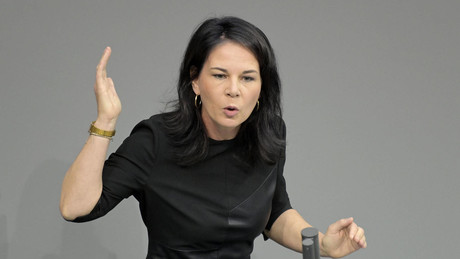
For well over a year, we have known that Germany’s Minister of Foreign Affairs Annalena Baerbock is a disgrace to the government she serves. The lady is not smart enough to flip hamburgers at McDonalds let alone sit in the federal cabinet and make pronouncements bearing on war and peace. She will never live down her remark that Vladimir Putin must change his course by 360 degrees.
However, I had always thought of Chancellor Olaf Scholz as a wily fox. Of course, I believed that he is an out and out coward, a sell-out to American interests at the expense of his own nation. His silence on the sabotage of the Nord Stream I pipeline was proof positive. But stupid?
What he and his Defense Minister Boris Pistorius were saying these past two days on the sidelines of the Ramstein gathering of donors to the Ukrainian war effort leave little doubt that he is also a damned fool.
I have in mind Scholz’s announcement that Germany will now budget for new procurement of air defense capabilities for itself and will join other European countries in their plans to build what might be called an iron dome, if we may borrow from the Israeli lexicon, to describe an impenetrable screen against incoming airborne attack.
If such an announcement might have appeared to be patriotic and an investment in the security of his nation, say, a week ago, the events of the past week have trashed all such thoughts. Following the successful Russian missile attacks on Poltava, on Lviv, on Krivoy Rog and on several other towns in Ukraine where there were large concentrations of NATO officers, high level advisers and instructors, the notion that there is any defense whatsoever against Russian hypersonic missiles was disproved beyond any doubt.
The Russians say that their attack on the communications institute in Poltava, which may have killed 200 and sent to hospital with grievous wounds another 500, was executed with a variant of the Iskander missile, which has a maximum speed of Mach 6.
If we concede that Poltava may not have enjoyed very good protection from anti-missile defense, the situation was precisely the opposite in Lviv, which was protected by an American Patriot system plus additional systems manufactured in Germany, Italy and elsewhere within NATO. For this hardened target, the Russians used their Kinzhal missile which travels at Mach 10. If this were not enough, they also have the Avangard family of missiles which reach Mach 20. There is absolutely no known air defense which can protect against these missiles now in the Russian arsenal, and we may well assume that by the time the Germans will actually acquire and set up what they now are thinking of buying, the Russians will have still more advanced attack missiles that remain invincible.
As for the long range nuclear armed missiles that the United States is planning to deliver to Germany in 2026 with the consent of Mr. Scholz, that only has the effect of painting a very big bulls-eye on his country. Moreover, it is a provocation that could prompt a preemptive strike from Russia.
Would it not make more sense for the German leadership to face up to the facts: namely that Russia’s ability to destroy their country is for the foreseeable future beyond their own ability to protect themselves, with or without American help. That admission should lead them to do the obvious: sit down with the Russians and come to terms over a new security architecture for Europe that everyone, EVERYONE can live with.
I close with a couple of further observations about what the Russians were doing this week. In Lviv, they not only killed numerous NATO personnel but destroyed a newly arrived train from Poland carrying a large amount of advanced weaponry for Ukraine. By choosing as targets installations in various cities where NATO officers are living, the Kremlin was delivering an unmistakable message to the Alliance, to its main decision maker, the United States, that it has the will and the wherewithal to take on NATO directly wherever and whenever it believes that its ‘red lines’ are being crossed. It may well be that even in Washington this message was received …and understood. To my knowledge, Zelensky’s bleating at Ramstein for permission to use long-range NATO supplied missiles to attack the Russian heartland fell on deaf ears.
©Gilbert Doctorow, 2024
Translation below into German (Andreas Mylaeus)
So dumm wie sie sind: Scholz und Pistorius bei der Beschaffung von neuen Raketenabwehrsystemen
Seit weit über einem Jahr wissen wir, dass die deutsche Außenministerin Annalena Baerbock eine Schande für die Regierung ist, der sie dient. Die Dame ist nicht klug genug, um bei McDonalds Hamburger zu braten, geschweige denn im Bundeskabinett zu sitzen und sich zu Krieg und Frieden zu äußern. Ihre Bemerkung, dass Wladimir Putin seinen Kurs um 360 Grad ändern müsse, wird sie nie wieder loswerden.
Bundeskanzler Olaf Scholz hatte ich dagegen immer für einen schlauen Fuchs gehalten. Natürlich habe ich geglaubt, dass er ein ausgesprochener Feigling ist, ein Verräter zugunsten von amerikanischen Interessen auf Kosten seines eigenen Landes. Sein Schweigen zur Sabotage der Nord Stream I-Pipeline war der beste Beweis dafür. Aber dumm?
Was er und sein Verteidigungsminister Boris Pistorius in den letzten beiden Tagen am Rande des Treffens der Geber für die ukrainischen Kriegsanstrengungen in Ramstein sagten, lässt wenig Zweifel daran, dass auch er ein verdammter Narr ist.
Ich denke dabei an die Ankündigung von Scholz, dass Deutschland nun neue Mittel für die Beschaffung von Luftverteidigungskapazitäten einplanen und sich den Plänen anderer europäischer Länder anschließen wird, etwas zu bauen, das man als „eiserne Kuppel“ bezeichnen könnte, um einen undurchdringlichen Schutzschild gegen ankommende Angriffe aus der Luft zu beschreiben, wenn man das israelische Lexikon verwenden darf.
Hätte eine solche Ankündigung noch vor einer Woche als patriotisch und als Investition in die Sicherheit seines Landes erscheinen können, so haben die Ereignisse der letzten Woche alle derartigen Gedanken zunichte gemacht. Nach den erfolgreichen russischen Raketenangriffen auf Poltawa, Lemberg, Kriwoj Rog und mehrere andere Städte in der Ukraine, in denen sich zahlreiche NATO-Offiziere, hochrangige Berater und Ausbilder aufhielten, wurde die Vorstellung, dass es überhaupt eine Verteidigung gegen russische Hyperschallraketen gibt, zweifelsfrei widerlegt.
Die Russen geben an, dass ihr Angriff auf das Kommunikationsinstitut in Poltawa, bei dem möglicherweise 200 Menschen getötet und weitere 500 mit schweren Verletzungen ins Krankenhaus eingeliefert wurden, mit einer Variante der Iskander-Rakete durchgeführt wurde, die eine Höchstgeschwindigkeit von Mach 6 hat.
Wenn wir zugeben, dass Poltawa vielleicht keinen sehr guten Schutz durch die Raketenabwehr genossen hat, so war die Situation in Lemberg genau umgekehrt, das durch ein amerikanisches Patriot-System und zusätzliche, in Deutschland, Italien und anderen NATO-Ländern hergestellte Systeme geschützt war. Für dieses gehärtete Ziel setzten die Russen ihre Kinzhal-Rakete ein, die sich mit Mach 10 fortbewegt. Als wäre das nicht genug, verfügen sie auch über die Avangard-Raketenfamilie, die eine Geschwindigkeit von Mach 20 erreicht. Es gibt absolut keine bekannte Luftverteidigung, die gegen diese Raketen im russischen Arsenal schützen kann, und wir können davon ausgehen, dass die Russen bis zu dem Zeitpunkt, an dem die Deutschen das, was sie jetzt zu kaufen gedenken, tatsächlich erwerben und einrichten werden, über noch fortschrittlichere Angriffsraketen verfügen werden, die unbesiegbar bleiben.
Was die nuklear bewaffneten Langstreckenraketen betrifft, die die Vereinigten Staaten mit Zustimmung von Herrn Scholz im Jahr 2026 an Deutschland liefern wollen, so hat dies nur den Effekt, eine sehr große Zielscheibe auf sein Land zu malen. Außerdem ist es eine Provokation, die einen Präventivschlag Russlands auslösen könnte.
Wäre es nicht sinnvoller, wenn die deutsche Führung den Tatsachen ins Auge sehen würde, nämlich dass Russland in der Lage ist, ihr Land auf absehbare Zeit zu zerstören, und dass sie nicht in der Lage ist, sich selbst zu schützen, mit oder ohne amerikanische Hilfe. Dieses Eingeständnis sollte sie dazu veranlassen, das Offensichtliche zu tun: sich mit den Russen zusammenzusetzen und sich auf eine neue Sicherheitsarchitektur für Europa zu einigen, mit der jeder, wirklich JEDER, leben kann.
Ich schließe mit ein paar weiteren Beobachtungen zu dem, was die Russen diese Woche getan haben. In Lemberg töteten sie nicht nur zahlreiche NATO-Mitarbeiter, sondern zerstörten auch einen gerade eingetroffenen Zug aus Polen, der eine große Menge an modernen Waffen für die Ukraine geladen hatte. Indem der Kreml Einrichtungen in verschiedenen Städten, in denen NATO-Offiziere leben, als Ziele auswählte, übermittelte er dem Bündnis und seinem wichtigsten Entscheidungsträger, den Vereinigten Staaten, die unmissverständliche Botschaft, dass er den Willen und die Mittel hat, die NATO direkt anzugreifen, wo immer und wann immer er glaubt, dass ihre „roten Linien“ überschritten werden. Es ist gut möglich, dass diese Botschaft sogar in Washington angekommen ist und verstanden wurde. Meines Wissens stieß Zelenskys Flehen in Ramstein um die Erlaubnis, von der NATO gelieferte Langstreckenraketen zum Angriff auf das russische Kernland einzusetzen, auf taube Ohren.
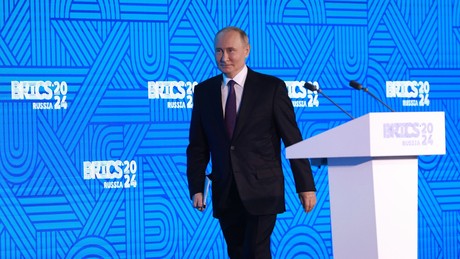
Far Eastern Economic Forum: perhaps the least covered international event by Western major media this weekVladimir Putin’s state visit to Mongolia at the start of this week drew the attention of U.S. and European media. The BBC and, I assume, other broadcasters put on screen video clips of the honor guard reception for the Russian President. However, nearly all coverage was directed at one very specific aspect of the visit: that it was Vladimir Putin’s first visit to a member state of the International Criminal Court (ICC), which had issued a year ago an international arrest warrant following the Court’s determination of his responsibility for what Ukrainian authorities called a deportation of Ukrainian children to children from their homes in occupied Ukraine to the Russian interior.
I won’t go into the details of the allegations against Putin other than to say that the charges were false and defamatory, since the children involved, whether orphans or otherwise, were left without parental supervision in areas of combat. They were temporarily moved away for their own safety. The entire proceedings of the ICC were a textbook case of manipulation and abuse of international organizations by the United States and could only serve to discredit such institutions and limit their effectiveness in pursuing justice in other cases that fall within their remit.
What happened in Mongolia, which is a member of the ICC and has a judge in its ranks, is that Ulan Bator refused to execute the arrest warrant and proceeded to give Mr. Putin a very warm welcome indeed, to the dismay of the United States which, with France and other allies (see the visit of Emmanuel Macron not long ago), had in advance applied all possible pressure on the Mongol leadership, shall we say by the usual extortionate methods, to prevent the visit of the Russian president.
From the Russian perspective, Putin’s visit to Ulan Bator was timed to coincide with the September 2-3 observance of the end of WWII in the Pacific, thereby providing an opportunity to recall the time when Mongolia and Soviet Russia worked very closely together to combat Japanese occupiers of nearby Chinese Manchuria. The visit featured wide-ranging discussions of possible new joint Russian-Mongolian infrastructure projects, including the long-delayed construction of a Power of Siberia-2 gas pipeline across Mongolia to facilitate deliveries of natural gas to China’s western regions.
For Mongolia, Putin’s visit provided an opportunity to assert its sovereignty and independence of Western meddling after a long period as a would-be American protectorate that began in the early 1990s when the Russian Federation slashed ties with Soviet dependencies like Mongolia and Cuba for which it no longer had the personnel or money to continue. Indeed, today Mongolia is both economically and diplomatically walking a tightrope between East and West very much in the same way as India. Commercial ties with Russia in particular are going strong, inasmuch as Russia provides one third or more of the country’s refined oil and other hydrocarbon imports.
None of these consequential elements of Mr. Putin’s visit to Mongolia were reflected in Western media accounts. No matter! What followed, when the Russian president proceeded on his way to the final destination of his trip, Vladivostok for the just opening Far Eastern Economic Forum was a still more complete news blackout by the West.
Well, not quite complete. I understand that the online editions of several British newspapers did serve up to their subscribers live coverage of Mr. Putin’s keynote address to the plenary session of the Forum yesterday.
Nonetheless, you likely have very little inkling of what has been going on in Vladivostok, and in the brief remarks that follow I will try to fill in the gaps.
*****
This was the 9th edition of the Far Eastern Forum in Vladivostok which is a counterpoint to the annual St Petersburg International Economic Forum that takes place in the spring. As in Petersburg, the Vladivostok event brings in commercial and diplomatic missions from all over the world and it also has very important foreign statesmen who appear on the dais with Vladimir Putin during the plenary session. They deliver speeches and participate in a Q&A. This time there were more than 70 countries represented at the Forum and the VIP foreign guests were the Prime Minister of Malaysia, Anwar Ibrahim, and the Chinese Vice President, Han Zheng.
The presence of Mr. Ibrahim was particularly relevant and also shocking for the Collective West, which is one reason you did not see his face on the BBC this week. Just a reminder that Britain was the former colonial overlord in what is now Malaysia.
Malaysia has formally requested to join BRICS and Russia will be the sponsor of their candidacy. They will participate in the BRICS summit that will be held in Kazan on 26 October and their admittance to the club as full members is a foregone conclusion.
Malaysia will be the first member of the Association of Southeast Asian Nations (ASEAN) to join BRICS, but we may well expect others to join soon after, starting perhaps with Vietnam. Their joining BRICS represents a significant departure from Malaysia’s hitherto close ties with the United States. There may be many explanations for this change of direction, but one standout is the country’s religious orientation. Malaysia’s population of 35 million is predominantly Muslim and they have watched with horror the Israeli genocide in Gaza which is enabled by Washington.
Russian commentators on Mr. Ibrahim’s address to the plenary session last night directed attention to his remarks on what sets Russia apart from other nations. Yes, he said, it is a major military power and economic power, but it is also a country with significant Soft Power attractiveness thanks to its cultural heritage. Ibrahim said that he was first drawn to the power of Russian literature through the books of Dostoevsky and Tolstoy, but then moved on to Chekhov and even the poetess Akhmatova. No doubt he said this with sincerity, but if he had been looking for a key to win over the sympathies of Russians for his country apart from the fine beaches which each year bring in 150,000 Russian tourists, then he could do no better than by highlighting Russian culture. We do not yet know what commercial deals were signed off between Malaysian and Russian companies during the Forum, but surely there were some successes at the level of mutual investments in manufacturing and software among other domains.
PRC Vice President Han Zheng was smiling and satisfied with the proceedings even when the moderator posed a rather provocative question about why the Chinese government seemed to be holding back Chinese companies from setting up shop across the border in Russia. Mr. Putin jumped in to soften the blow, explaining that Russia is doing everything possible now to make such moves more attractive to their prospective Chinese partners.
As regards China, Orientalist experts appearing on the Russian talk shows in the evening explained that there are ever closer relations being established between the northeast region of China and the Russian Far East region. Indeed, while the South of China is oriented to doing business with the United States and Europe, the Northeast is integrating with Russia. To add momentum to this trend, a number of the key infrastructure projects that President Putin mentioned in his address to the plenary session are precisely directed at improving logistics of trade across the Amur River, meaning additional bridges and improved customs posts so that waiting time for trucks can be reduced to 10 minutes or less.
What little reporting on Putin’s remarks at the Forum that we see in Western media have cherry picked his answers to some questions following his speech, so as to produce the impression that he spoke about the Ukraine conflict and was in one way or another threatening the West with nuclear attack. Nothing could be further from the truth.
This year’s Economic Forum was dedicated to the theme of the Far Eastern region in 2030. Accordingly, Mr. Putin’s speech dealt exclusively with Russia’s plans for accelerated development of the region through two parallel sets of initiatives: building infrastructure to attract companies to the region and ensuring living conditions for the local population that are highly attractive. The idea is to offer career growth to Russians under the age of 35 who will settle there for a good long time, raise families and provide a pool of skilled manpower to drive economic expansion that far outstrips that of other Russian regions.
The infrastructure investments by the government will focus first on logistics and transportation. This means doubling or more the freight capacity of the mainline railroads serving the region, namely the Trans-Siberian and the Baikal-Amur railway (BAM in Russian). In the time period under discussion, Russia will complete construction of a major highway extending from Petersburg in the West to Vladivostok in the East. It means expanding airports, expanding seaports and the like in the Maritime region and in the adjacent Far Eastern regions as far west as Eastern Siberia and as far north as the arctic coast where further investment is needed to accommodate growing use of the Northern Sea Route and to serve the centers of extractive industries. Some of the regional infrastructure will be done in joint government-private business ventures, with which Russia has many years of fruitful experience now.
With regard to incentives to encourage migration to the Far East, the existing preferential 2% mortgage rate for settlers under the age of 35, for veterans of the SMO, for doctors, school teachers and other professions in great demand will be continued and expanded to take in still more categories of applicants. New housing developments will be endowed with medical clinics, high quality schools and other essentials of comfortable family life. The days of dormitory accommodations for workers attached to factories built in vast empty lands typical of the Soviet days are recognized as having inhibited long term settlement of the region, and will not be repeated.
Particular efforts will be made to improve higher education with establishment of additional university centers and expansion of existing ones, as in Vladivostok itself. Where possible, commercial research centers will be attached to these universities.
In fact, the guiding principles of the master plan for the period to 2030 have been in place for nearly a decade, though they were financed much more modestly. Nonetheless, they achieved results that Vladimir Putin could read off to the audience: namely positive demographic trends, especially as regards young settlers aged 20-22 and the higher rate of economic growth. As Putin said in the conclusion of his speech, the Far Eastern region is the leader in Russia’s outreach to the world, being situated among the world’s most dynamic countries that outpace the West by more than 2:1.
To be sure, Vladimir Putin allowed himself to be drawn into discussion of world events outside the framework of the Forum. It is in this context that he spoke of the dire situation of the Ukrainian military in the Donbas, who have exhausted their human reserves and lost their armor. He also allowed himself to reply to a question about whom Russia favors as winner of the November presidential elections in the USA. With a wry smile, he acknowledged that Russia’s choice is Kamala because of her ‘contagious smile.’ He said he does not believe that a person with such a smile could be truly hostile. To this, I will quote from Verdi’s Rigoletto: ‘le prince s’amuse.’
©Gilbert Doctorow, 2024
Translated below into German (Andreas Mylaeus)
Fernöstliches Wirtschaftsforum: das internationale Ereignis, über das die westlichen Medien in dieser Woche vielleicht am wenigsten berichtet haben
Der Staatsbesuch von Wladimir Putin in der Mongolei zu Beginn dieser Woche hat die Aufmerksamkeit der amerikanischen und europäischen Medien auf sich gezogen. Die BBC und, wie ich annehme, auch andere Sender zeigten Videoclips vom Empfang der Ehrengarde für den russischen Präsidenten. Fast die gesamte Berichterstattung konzentrierte sich jedoch auf einen ganz bestimmten Aspekt des Besuchs: den ersten Besuch Wladimir Putins in einem Mitgliedstaat des Internationalen Strafgerichtshofs (IStGH), der vor einem Jahr einen internationalen Haftbefehl ausgestellt hatte, nachdem der Gerichtshof seine Verantwortung für die von den ukrainischen Behörden so bezeichnete Deportation ukrainischer Kinder aus ihren Häusern in der besetzten Ukraine ins russische Hinterland festgestellt hatte.
Ich werde nicht auf die Einzelheiten der Anschuldigungen gegen Putin eingehen, sondern nur sagen, dass die Anschuldigungen falsch und diffamierend waren, da die betroffenen Kinder, ob Waisen oder nicht, ohne elterliche Aufsicht in Kampfgebieten zurückgelassen wurden. Sie wurden zu ihrer eigenen Sicherheit vorübergehend weggebracht. Das gesamte Verfahren des IStGH war ein Lehrbuchfall der Manipulation und des Missbrauchs internationaler Organisationen durch die Vereinigten Staaten und konnte nur dazu dienen, diese Institutionen zu diskreditieren und ihre Wirksamkeit bei der Verfolgung von Gerechtigkeit in anderen Fällen, die in ihren Zuständigkeitsbereich fallen, einzuschränken.
In der Mongolei, die Mitglied des Internationalen Strafgerichtshofs ist und einen Richter in ihren Reihen hat, weigerte sich Ulan Bator, den Haftbefehl zu vollstrecken, und bereitete Herrn Putin einen sehr herzlichen Empfang, sehr zum Missfallen der Vereinigten Staaten, die zusammen mit Frankreich und anderen Verbündeten (siehe den Besuch von Emmanuel Macron vor kurzem) im Vorfeld mit den üblichen erpresserischen Methoden Druck auf die mongolische Führung ausgeübt hatten, um den Besuch des russischen Präsidenten zu verhindern.
Aus russischer Sicht fiel Putins Besuch in Ulan Bator zeitlich mit den Feierlichkeiten zum Ende des Zweiten Weltkriegs im Pazifik am 2. und 3. September zusammen und bot damit die Gelegenheit, an die Zeit zu erinnern, als die Mongolei und Sowjetrussland im Kampf gegen die japanischen Besatzer in der nahe gelegenen chinesischen Mandschurei sehr eng zusammengearbeitet haben. Im Rahmen des Besuchs wurden umfassende Gespräche über mögliche neue gemeinsame russisch-mongolische Infrastrukturprojekte geführt, darunter auch über den lange verzögerten Bau einer Power of Siberia-2-Gaspipeline durch die Mongolei, die die Lieferung von Erdgas in die westlichen Regionen Chinas erleichtern soll.
Für die Mongolei bot Putins Besuch eine Gelegenheit, ihre Souveränität und Unabhängigkeit von westlichen Einmischungen zu behaupten, nachdem sie lange Zeit ein Möchtegern-Protektorat der USA war, das Anfang der 1990er Jahre begann, als die Russische Föderation die Beziehungen zu von der Sowjetunion abhängigen Ländern wie der Mongolei und Kuba abbrach, für die sie nicht mehr das Personal oder das Geld hatte, um die ehemalige Politik fortzusetzen. Tatsächlich befindet sich die Mongolei heute sowohl wirtschaftlich als auch diplomatisch auf einer Gratwanderung zwischen Ost und West, ähnlich wie Indien. Vor allem die Handelsbeziehungen zu Russland werden intensiviert, da Russland ein Drittel oder mehr des raffinierten Öls und anderer Kohlenwasserstoffeinfuhren des Landes liefert.
Keines dieser folgenreichen Elemente des Besuchs von Herrn Putin in der Mongolei wurde in den westlichen Medien erwähnt. Das macht nichts! Was folgte, als der russische Präsident sich auf den Weg zum Endziel seiner Reise, Wladiwostok, zum gerade eröffneten Fernöstlichen Wirtschaftsforum machte, war eine noch vollständigere Nachrichtensperre des Westens.
Nun, nicht ganz. Soweit ich weiß, haben die Online-Ausgaben mehrerer britischer Zeitungen ihren Abonnenten eine Live-Berichterstattung über die Grundsatzrede von Herrn Putin auf der gestrigen Plenarsitzung des Forums angeboten.
Nichtsdestotrotz haben Sie wahrscheinlich kaum eine Ahnung davon, was in Wladiwostok vor sich ging, und in den folgenden kurzen Ausführungen werde ich versuchen, die Lücken zu füllen.
*****
Dies war die 9. Ausgabe des Fernost-Forums in Wladiwostok, das einen Gegenpol zum jährlich im Frühjahr stattfindenden Internationalen Wirtschaftsforum in St. Petersburg bildet. Wie in Petersburg kommen auch in Wladiwostok Handels- und diplomatische Vertretungen aus der ganzen Welt zusammen, und es sind auch sehr wichtige ausländische Staatsmänner anwesend, die während der Plenarsitzung mit Wladimir Putin auf dem Podium sitzen. Sie halten Reden und nehmen an einer Fragerunde teil. Diesmal waren mehr als 70 Länder auf dem Forum vertreten, und die ausländischen Ehrengäste waren der Premierminister von Malaysia, Anwar Ibrahim, und der chinesische Vizepräsident Han Zheng.
Die Anwesenheit von Herrn Ibrahim war besonders wichtig und für den kollektiven Westen auch schockierend, was ein Grund dafür ist, dass Sie sein Gesicht diese Woche nicht in der BBC gesehen haben. Nur zur Erinnerung: Großbritannien war der ehemalige Kolonialherr im heutigen Malaysia.
Malaysia hat offiziell beantragt, den BRICS beizutreten, und Russland wird die Kandidatur unterstützen. Sie werden am BRICS-Gipfel teilnehmen, der am 26. Oktober in Kasan stattfinden wird, und ihre Aufnahme in den Club als Vollmitglieder ist eine ausgemachte Sache.
Malaysia wird das erste Mitglied des Verbandes Südostasiatischer Nationen (ASEAN) sein, das den BRICS beitritt, aber wir können davon ausgehen, dass andere Länder bald folgen werden, angefangen vielleicht mit Vietnam. Ihr Beitritt zu den BRICS bedeutet eine deutliche Abkehr von den bisher engen Beziehungen Malaysias zu den Vereinigten Staaten. Es mag viele Erklärungen für diesen Richtungswechsel geben, aber eine davon ist die religiöse Ausrichtung des Landes. Die 35 Millionen Einwohner Malaysias sind überwiegend Muslime und haben mit Entsetzen den israelischen Völkermord im Gazastreifen beobachtet, der von Washington unterstützt wird.
Russische Kommentatoren lenkten die Aufmerksamkeit bei Herrn Ibrahims Rede vor der Plenarsitzung gestern Abend auf seine Ausführungen darüber, was Russland von anderen Nationen unterscheidet. Ja, sagte er, es sei eine große Militärmacht und Wirtschaftsmacht, aber es sei auch ein Land, das dank seines kulturellen Erbes eine große Anziehungskraft für Soft Power habe. Ibrahim sagte, dass er zunächst durch die Bücher von Dostojewski und Tolstoi von der Kraft der russischen Literatur angezogen wurde, dann aber zu Tschechow und sogar zur Dichterin Achmatowa überging. Zweifellos sagte er dies mit Aufrichtigkeit, aber wenn er nach einem Schlüssel suchte, um die Sympathien der Russen für sein Land zu gewinnen, abgesehen von den schönen Stränden, die jedes Jahr 150.000 russische Touristen anlocken, dann konnte er nichts Besseres tun, als die russische Kultur hervorzuheben. Wir wissen noch nicht, welche Handelsverträge zwischen malaysischen und russischen Unternehmen während des Forums unterzeichnet wurden, aber sicherlich gab es einige Erfolge auf der Ebene gegenseitiger Investitionen, unter anderem in den Bereichen Fertigung und Software.
Der Vizepräsident der VR China, Han Zheng, lächelte und war mit dem Verlauf des Gesprächs zufrieden, selbst als der Moderator eine recht provokante Frage stellte, warum die chinesische Regierung chinesische Unternehmen offenbar davon abhält, sich jenseits der Grenze in Russland anzusiedeln. Putin schaltete sich ein, um die Situation zu entschärfen, und erklärte, dass Russland jetzt alles tut, um solche Schritte für potenzielle chinesische Partner attraktiver zu machen.
Was China betrifft, so erklärten Orientalisten, die am Abend in russischen Talkshows auftraten, dass sich die Beziehungen zwischen dem Nordosten Chinas und dem Fernen Osten Russlands immer enger gestalten. Während nämlich der Süden Chinas auf Geschäfte mit den Vereinigten Staaten und Europa ausgerichtet ist, integriert sich der Nordosten mit Russland. Um diesen Trend zu verstärken, zielen einige der wichtigsten Infrastrukturprojekte, die Präsident Putin in seiner Rede vor dem Plenum erwähnte, genau auf die Verbesserung der Logistik des Handels über den Amur ab, d.h. zusätzliche Brücken und verbesserte Zollstellen, so dass die Wartezeit für Lastwagen auf 10 Minuten oder weniger reduziert werden kann.
Die wenigen Berichte über Putins Äußerungen auf dem Forum, die in den westlichen Medien zu finden sind, haben seine Antworten auf einige Fragen im Anschluss an seine Rede herausgepickt, um den Eindruck zu erwecken, er habe über den Ukraine-Konflikt gesprochen und dem Westen auf die eine oder andere Weise mit einem Atomangriff gedroht. Nichts könnte weiter von der Wahrheit entfernt sein.
Das diesjährige Wirtschaftsforum war dem Thema der Region Fernost im Jahr 2030 gewidmet. Dementsprechend befasste sich Putin in seiner Rede ausschließlich mit den Plänen Russlands für eine beschleunigte Entwicklung der Region durch zwei parallele Initiativen: Aufbau von Infrastrukturen, um Unternehmen in die Region zu locken, und Gewährleistung äußerst attraktiver Lebensbedingungen für die örtliche Bevölkerung. Die Idee ist, Russen unter 35 Jahren eine berufliche Entwicklung zu bieten, die sich dort für eine lange Zeit niederlassen, Familien gründen und ein Reservoir an qualifizierten Arbeitskräften zur Verfügung stellen, um das Wirtschaftswachstum voranzutreiben, das das anderer russischer Regionen weit übertrifft.
Die Infrastrukturinvestitionen der Regierung werden sich zunächst auf Logistik und Transport konzentrieren. Dies bedeutet eine Verdoppelung oder mehr der Frachtkapazität der Haupteisenbahnlinien, die die Region bedienen, nämlich der Transsibirischen und der Baikal-Amur-Eisenbahn (BAM auf Russisch). Im fraglichen Zeitraum wird Russland den Bau einer großen Autobahn abschließen, die von Petersburg im Westen bis Wladiwostok im Osten reicht. Dies bedeutet den Ausbau von Flughäfen, Seehäfen und dergleichen in der maritimen Region und in den angrenzenden fernöstlichen Regionen bis nach Ostsibirien und bis zur arktischen Küste, wo weitere Investitionen erforderlich sind, um der zunehmenden Nutzung des Nördlichen Seewegs Rechnung zu tragen und die Zentren der mineralgewinnenden Industrie zu bedienen. Ein Teil der regionalen Infrastruktur wird im Rahmen gemeinsamer staatlich-privater Unternehmen realisiert werden, mit denen Russland bereits seit vielen Jahren gute Erfahrungen gemacht hat.
Was die Anreize für die Zuwanderung in den Fernen Osten anbelangt, so wird der bestehende Vorzugshypothekensatz von 2 % für Siedler unter 35 Jahren, für Veteranen der SMO, für Ärzte, Lehrer und andere gefragte Berufe fortgesetzt und auf noch mehr Kategorien von Bewerbern ausgedehnt. Neue Wohnsiedlungen werden mit medizinischen Kliniken, hochwertigen Schulen und anderen wichtigen Einrichtungen für ein komfortables Familienleben ausgestattet. Die für die Sowjetzeit typischen Wohnheime für Arbeiter, die an Fabriken angeschlossen sind, die auf riesigen leeren Flächen errichtet wurden, haben sich als Hemmschuh für die langfristige Besiedlung der Region erwiesen und werden sich nicht wiederholen.
Besondere Anstrengungen werden unternommen, um die Hochschulbildung durch die Einrichtung zusätzlicher Universitätszentren und den Ausbau bestehender Zentren, wie in Wladiwostok selbst, zu verbessern. Soweit möglich, werden diesen Universitäten kommerzielle Forschungszentren angegliedert.
Die Leitprinzipien des Masterplans für den Zeitraum bis 2030 gelten bereits seit fast einem Jahrzehnt, wenn auch mit wesentlich bescheideneren Mitteln. Dennoch haben sie Ergebnisse erzielt, die Wladimir Putin den Zuhörern vorlesen konnte: nämlich eine positive demografische Entwicklung, insbesondere bei den jungen Siedlern im Alter von 20-22 Jahren, und ein höheres Wirtschaftswachstum. Wie Putin zum Abschluss seiner Rede sagte, ist die Region im Fernen Osten führend bei der Annäherung Russlands an die Welt, da sie zu den dynamischsten Ländern der Welt gehört, die den Westen im Verhältnis 2:1 übertreffen.
Natürlich ließ sich Wladimir Putin auch außerhalb des Forums in die Diskussion über das Weltgeschehen einbinden. In diesem Zusammenhang sprach er über die katastrophale Lage des ukrainischen Militärs im Donbass, das seine menschlichen Reserven erschöpft und seine Rüstung verloren hat. Er erlaubte sich auch, auf die Frage zu antworten, wen Russland als Sieger der Präsidentschaftswahlen in den USA im November favorisiert. Mit einem schiefen Lächeln räumte er ein, dass Russland Kamala wegen ihres „ansteckenden Lächelns“ favorisiere. Er sagte, er glaube nicht, dass eine Person mit einem solchen Lächeln wirklich feindselig sein könne. Dazu möchte ich aus Verdis Rigoletto zitieren: ‘le prince s’amuse’.
‘Judging Freedom’: edition of 5 SeptemberToday’s discussion of the grim situation surrounding Kiev’s misadventure in the Kursk region of the Russian Federation that it invaded nearly a month ago was leavened by video clips from the latest surreal Congressional hearings into alleged misbehavior by the Russian global broadcaster RT. Indictments of Americans said to be in the pay of RT are now awaited, as they are charged with seeking to influence the coming presidential elections at the bidding of a foreign power. In fact, this is a McCarthyite style witch hunt that violates both spirit and legal protections of free speech in the U.S. constitution, as Judge Andrew Napolitano states at the conclusion of our chat.
As I said in the interview, if Congress wants to bring to justice disseminators of Russian propaganda, then they are going to have to arrest the lead reporters of The New York Times, The Financial Times and other mainstream which, since the first indications that the Zelensky gambit in Kursk was failing, have been bringing to their readers all the dismal news for Ukraine from the front lines that you will find to be indistinguishable from what is carried in Russian media.
Otherwise, the interview also dealt with the big cabinet changes in Kiev that yesterday removed from power the country’s very militant Foreign Minister, who was rumored to be a favorite of Washington to succeed Zelensky when Washington decides that his time is up.
The devastating Russian missile attack on the military communications institute in Poltava was another topic today. As I noted, the reported deaths in the attack have risen from an initial count of 41 or 50 to the latest estimate by Russian news of 200 killed and hundreds more wounded. By all accounts this was the most successful Russian attack on key military personnel, both Ukrainian and foreign instructors, since the start of the SMO. Notable, too, is the loss borne by Sweden. That there were Swedish ‘volunteers’ in Poltava was clear very quickly after the attack when their friends in Sweden confirmed their deaths. Obviously, the numbers were considerable, because earlier today Sweden’s Foreign Minister tendered his resignation.
As I mentioned online, the Swedes seem to have an unfortunate attachment to Poltava. This is where in 1709 the armies of their king Charles XII were decimated by the armies of Peter the Great in what was the decisive battle of the Northern War that put an end to Swedish imperial pretensions in East Central Europe. Now with the missile strike on the institute, Swedes lost round two.
I also used my time at the microphone to emphasize that the imminent collapse of the Ukrainian armies, the ‘crumbling of NATO before our eyes’ and other ‘breaking news’ statements these past several days of some of my peers on the leading video channels that we call alternative media are greatly exaggerated. I see in this the general human inclination to project as facts what is no more than our personal wishes. And I do not by any means exclude myself from occasionally falling into this trap.
To be more precise, I do not now see the war ‘ending on the battlefield,’ as Professor John Mearsheimer was saying in an interview on another channel yesterday. I assume he meant the Russians would be overrunning the last Ukrainian trenches and putting their flag atop the building of the Ukrainian parliament (Rada) just before what is left of the Ukrainian leadership signs papers of capitulation.
No, I cannot believe that Russians will cross the Dniepr river after liberating Donbas in the coming month or two to chase down and encircle what is left of the Ukrainian armed forces. That is a very big logistical challenge and it would be far more costly in Russian lives than Vladimir Putin is likely to risk. Instead, I think it is conceivable that the Russians will accelerate their bombing of Lvov/Lviv/Lemberg and Western Ukraine until they sue for peace or until their cities are flattened and most people flee to the EU as refugees.
©Gilbert Doctorow, 2024
See https://www.youtube.com/watch?v=p4Wh4F7mZHc&t=617s
Transcription below from a reader, followed by translation into German (Andreas Mylaeus)
Judge Andrew Napolitano: 0:31 Hi everyone, Judge Andrew Napolitano here for "Judging Freedom". Today is Thursday, September 5th, 2024. Professor Gilbert Doctorow joins us now. Professor Doctorow, always, always a pleasure. Here is what-- Gilbert Doctorow, PhD: [Thank you for inviting me.] Napolitano: Of course. Here is what Americans woke up to this morning. Chris, cuts 9 and 10. US AG Merrick Garland: 0:56 The subject matter and content of many of the videos published by the company are often consistent with Russia's interest in amplifying US domestic divisions, in order to weaken US opposition to core Russian interests, particularly its ongoing war in Ukraine. The company never disclosed to the influencers or to their millions of followers its ties to RT and the Russian government. Instead, the defendants and the company claimed that the company was sponsored by a private investor. But that private investor was a fictitious persona. The charges unsealed this morning do not represent the end of the investigation. It remains active and ongoing. Napolitano: 1:45 That, of course, was the Attorney General of the United States, Merrick Garland; seated to his left was the Director of the FBI, Chris Wray. The government announced that a grand jury indicted an American corporation for accepting money from RT and duping influencers, I not among them, duping influencers into saying things. And through a circuitous route, the influencers were paid by Russian money. All of this, of course, is supposedly a horrible thing, and the government never cares about the First Amendment. But ... what is your take on this, and is this even a blip on the radar screen in Moscow this morning? Doctorow: 2:31 I can't say how they received it in Moscow this morning. I'm sure that they will come to the defense of Margarita Simonyan, the director-general of Varty, and it would be, within Russia that would be kicking a sacred cow to say what I'm about to say. Ever since the Russian transmissions were removed from the satellites-- which had been carrying them as commercial carriers, under instructions from the United States and its allies-- ever since the cable networks stopped carrying RT in the States, the possibilities for RT exerting a big influence in the States were reduced to close to nil. But that is simply a statement of fact. Now I will add to that statement that is subjective, my own opinion of RT and its possibilities for influence in the United States. I think they also are nil. Margarita Simonyan is a very intelligent lady, and she has appeared regularly on the most-- one of the principal talk shows of Russia, Vladimir Solovyov's "Evening" shows. And she has presented herself in a way that you have to have respect for the woman's intelligence and her ability to mix culture and politics. 3:59 However, from the beginning, although I appeared once upon a time on some of the programs like "Crosstalk", I lost my respect for RT because they were doing in a rather amateurish way what Russian state television news does in the most professional way. And it would have been illuminating if from the beginning, the programs on Russian state television, which are broadcast for the Russian domestic audience, were rebroadcast with, ideally with voiceover or with subtitles in English, so that they would be accessible to the world. That information, Russia's views of the day's events, would be a very big help to all those in the West and in the world at large, who want to know the Russian take on what is going on in the world and where Russia is headed. RT was not that. RT was supposed to be a mirror to the United States. But a mirror that's held up by an adversary is not a very good mirror. Napolitano: 5:05 So when you said you're about to kick a sacred cow, you meant you're about to criticize the professionalism of RT, such as it was before they shut it down over here. Doctorow: Exactly. There were too many over-aged and/or incompetent journalists who found a nest on the payroll of RT. I don't mean to criticize everyone, that would be foolish, but my predominant takeaway was that in promoting RT, the Russians demonstrated yet again that they are very poor at engaging in the information wars in the world at large. I don't mean to say they have no capabilities at home. At home they do a wonderful job in selling their views to their domestic audience. And not by propaganda, but by very-- dealing with their population in a very respectful way and and exposing their population to what is going on in the "Wall Street Journal", in the "Financial Times", "New York Times", on CNN and so forth; and letting their population decide for themselves. That is high-level journalism. RT was always low-level journalism. Napolitano: 6:22 Here's a clip from my former employer Fox News. It's on Fox News. It's actually a non-Fox journalist questioning the Attorney General about a statement sent to Fox News by RT. Watch this, please. Cut number 19. Reporter's question: 6:42 Russia today sent a statement to Fox News and some other outlets here mocking the situation. They had five bullet points or six bullet points. The first said, "Ha, ha, ha, ha, ha, 2016 wants its cliches back." In all seriousness, there is a subsection of the country that when they hear Russian interference, they may believe that it's not true. It's not a real thing. How do you assure people this is a real situation? AG Garlaand: I'm sure that was much funnier in the original Russian. But for us, it's not funny. This is deadly serious, and we are going to treat it accordingly. Napolitano: 07:17 So RT attempted to respond. I didn't see the statement that was sent to Fox News. I only know of this reporter's summary of it. Does RT really care what the American Justice Department thinks of it? This is a mockery of a core American value called the freedom of speech. Doctorow: This is an exercise in McCarthyism. Napolitano: An exercise in what? Doctorow: McCarthyism. It is a witch hunt. And it has to be called out for that. It is also run by people who really don't understand very much about Russia, or about RT, or about the American public. It is foolhardy, to say the least, to deprive the American public of the RT programs. But that's happened, and now they're going into a witch hunt for anyone with connections. I have to make a little remark here. A couple of days ago, you had Scott Ritter on, and he had a barking dog. I am in an apartment, which is adjacent to an apartment two floors away, where they're doing a renovation. And so you're going to hear some background noise, which is regrettable. Napolitano: 8:32 Oh, you know, that's very kind of you, Professor. And we're used to it. My own dog, Chris, who happens to be curled up at my feet right now, every once in a while senses a squirrel outside and is thinking about a second breakfast. But thank you very much. Let's go to Kursk, Professor Doctorow. What is the latest situation there? President Zelensky has boasted, and I'm going to use the American nomenclature, he said it in kilometers. Not kilometers, he said it in however you measure the geographic areas in Europe. He has boasted that his troops now control 500 square miles of Kursk and he claims that's a benefit. He also claims that as a result of his invasion in Kursk, he has captured Russian soldiers whom he has traded for exchange for Ukrainian soldiers previously captured, he views that as a plus. What is your view of the current situation in Kursk? Doctorow: 09:44 Well, the situation in Kursk has been covered extensively in major media. And this is a stunning change in how the "Financial Tim


Quelle: Sputnik © Wladimir Fe


Kamala Harris, US-Präsidentschaftskandidatin der Demokraten, ohne jedes politische Programm, aber immer lachend: eine ideale Figur, um von den Machern des "Deep State" mit reinem Marketing zur Wahlsiegerin gemacht zu werden. (Photo Politico)
Quelle: Sputnik © Ilja Pitaljew