
World Climate Declaration There is no climate emergency
clintel.org, August 31, 2022, world climate declaration
Climate science should be less political, while climate policies should be more scientific. In particular, scientists should emphasize that their modeling output is not the result of magic: computer models are human-made. What comes out is fully dependent on what theoreticians and programmers have put in: hypotheses, assumptions, relationships, parameterizations, stability constraints, etc. Unfortunately, in mainstream climate science most of this input is undeclared.
To believe the outcome of a climate model is to believe what the model makers have put in. This is precisely the problem of today’s climate discussion to which climate models are central. Climate science has degenerated into a discussion based on beliefs, not on sound self-critical science. We should free ourselves from the naïve belief in immature climate models. In future, climate research must give significantly more emphasis to empirical science.
There is no climate emergency
A global network of over 1200 scientists and professionals has prepared this urgent message. Climate science should be less political, while climate policies should be more scientific. Scientists should openly address uncertainties and exaggerations in their predictions of global warming, while politicians should dispassionately count the real costs as well as the imagined benefits of their policy measures.
Natural as well as anthropogenic factors cause warming
The geological archive reveals that Earth’s climate has varied as long as the planet has existed, with natural cold and warm phases. The Little Ice Age ended as recently as 1850. Therefore, it is no surprise that we now are experiencing a period of warming.
Warming is far slower than predicted
The world has warmed significantly less than predicted by IPCC on the basis of modeled anthropogenic forcing. The gap between the real world and the modeled world tells us that we are far from understanding climate change.
Climate policy relies on inadequate models
Climate models have many shortcomings and are not remotely plausible as global policy tools. They blow up the effect of greenhouse gases such as CO2. In addition, they ignore the fact that enriching the atmosphere with CO2 is beneficial.
CO2 is plant food, the basis of all life on Earth
CO2 is not a pollutant. It is essential to all life on Earth. Photosynthesis is a blessing. More CO2 is beneficial for nature, greening the Earth: additional CO2 in the air has promoted growth in global plant biomass. It is also good for agriculture, increasing the yields of crops worldwide.
Global warming has not increased natural disasters
There is no statistical evidence that global warming is intensifying hurricanes, floods, droughts and suchlike natural disasters, or making them more frequent. However, there is ample evidence that CO2-mitigation measures are as damaging as they are costly.
Climate policy must respect scientific and economic realities
There is no climate emergency. Therefore, there is no cause for panic and alarm. We strongly oppose the harmful and unrealistic net-zero CO2 policy proposed for 2050. If better approaches emerge, and they certainly will, we have ample time to reflect and re-adapt. The aim of global policy should be ‘prosperity for all’ by providing reliable and affordable energy at all times. In a prosperous society men and women are well educated, birthrates are low and people care about their environment.
Epilogue
The World Climate Declaration (WCD) has brought a large variety of competent scientists together from all over the world*. The considerable knowledge and experience of this group is indispensable in reaching a balanced, dispassionate and competent view of climate change.
From now onward the group is going to function as “Global Climate Intelligence Group”. The CLINTEL Group will give solicited and unsolicited advice on climate change and energy transition to governments and companies worldwide.
* It is not the number of experts but the quality of arguments that counts
World Climate Declaration AMBASSADORS
NOBEL LAUREATE PROFESSOR IVAR GIAEVER NORWAY/USA
PROFESSOR GUUS BERKHOUT / THE NETHERLANDS
DR. CORNELIS LE PAIR / THE NETHERLANDS
PROFESSOR REYNALD DU BERGER / FRENCH SPEAKING CANADA
BARRY BRILL / NEW ZEALAND
VIV FORBES / AUSTRALIA
DR. PATRICK MOORE / ENGLISH SPEAKING CANADA
JENS MORTON HANSEN / DENMARK
PROFESSOR LÁSZIÓ SZARKA / HUNGARY
PROFESSOR SEOK SOON PARK / SOUTH KOREA
PROFESSOR JAN-ERIK SOLHEIM / NORWAY
STAVROS ALEXANDRIS / GREECE
FERDINAND MEEUS / DUTCH SPEAKING BELGIUM
PROFESSOR RICHARD LINDZEN / USA
HENRI A. MASSON / FRENCH SPEAKING BELGIUM
PROFESSOR INGEMAR NORDIN / SWEDEN
JIM O’BRIEN / REPUBLIC OF IRELAND
PROFESSOR IAN PLIMER / AUSTRALIA
DOUGLAS POLLOCK / CHILE
DR. BLANCA PARGA LANDA / SPAIN
PROFESSOR ALBERTO PRESTININZI / ITALY
PROFESSOR BENOÎT RITTAUD / FRANCE
DR. THIAGO MAIA / BRAZIL
PROFESSOR FRITZ VAHRENHOLT / GERMANY
THE VISCOUNT MONCKTON OF BRENCHLEY / UNITED KINGDOM
DUŠAN BIŽIĆ / CROATIA, BOSNIA AND HERZEGOVINA, SERBIA AND MONTE NEGRO
TOTAL SIGNATORIES 1200: https://clintel.org/wp-content/uploads/2022/08/WCD-version-0831224413.pdf
Info: https://clintel.org/world-climate-declaration
Es gibt keinen Klimanotstand
clintel.org/germany-wcd,
Ein Zusammenschluss von 1200 Wissenschaftlern und Fachleuten wendet sich mit dieser wichtigen Mitteilung an die Öffentlichkeit: Die Klimawissenschaften müssen dringend entpolitisiert werden. Gleichzeitig sollte die Klimapolitik wissenschaftlicher werden. Wissenschaftler müssen verbleibende Unsicherheiten klar benennen und Übertreibungen in ihren Klimavorhersagen vermeiden. Politiker sollten das Kosten-Nutzen-Verhältnis ihrer Klimapolitik realistischer einschätzen.
Klimaerwärmung hat anthropogene und natürliche Ursachen
Geologische Untersuchungen belegen, dass sich das Klima stets gewandelt hat, geprägt durch ein natürliches Wechselspiel zwischen Kalt- und Warmphasen. Die Kleine Eiszeit endete um 1850, wobei die darauffolgende moderne Ewärmung gut ins Bild passt.
Erwärmung läuft langsamer ab als von Modellen vorhergesagt
Das Klima hat sich in den letzten Jahrzehnten lediglich halb so schnell erwärmt wie ursprünglich vom Weltklimarat IPCC auf Basis von Computermodellen vorhergesagt. Dies zeigt, dass wir die klimatischen Zusammenhänge noch immer zu schlecht verstehen, um hierauf weitreichende Planungen gründen zu können.
Klimapolitik fußt auf unausgereiften Modellen
Klimamodelle haben noch zu viele Schwächen und eignen sich daher nicht als politische Planungsgrundlage. Die Erwärmungswirkung des CO2 wird in den Modellen signifikant zu hoch angesetzt. Für das Wachstum von Pflanzen bringt eine höhere CO2-Konzentration in der Atmosphäre sogar Vorteile.
CO2 stellt die Nahrungsgrundlage der Pflanzenwelt dar
CO2 ist kein Giftstoff, sondern ist die Basis der Photosynthese. Eine höhere CO2-Konzentration lässt die Erde ergrünen, kurbelt das Pflanzenwachstum an. Auch die Landwirtschaft kann profitieren, da sich Ernten steigern lassen.
Extremwetter vom Klimawandel weitgehend unberührt
Bislang konnte keine Zunahme von Hurrikanen, Überflutungen, Dürren und anderer Extremwetterarten festgestellt werden, trotz Klimaerwärmung. Hingegen haben einige Klimaschutzmaßnahmen bereits starke ökologische Schäden angerichtet und hohe Kosten bei geringem Nutzen verursacht.
Klimapolitik muss wissenschaftliche und ökonomische Realitäten anerkennen
Es gibt keinen Klimanotstand. Es gibt daher auch keinen Grund in Hysterie und Panikmodus zu verfallen. Wir sind gegen die geplante Klimaneutralität bis 2050, die viel Wohlstand in der Gesellschaft vernichten wird. Wir haben mehr Zeit für die Dekarbonisierung und die Entwicklung adäquater technischer Lösungen. Ein lohnenderes Ziel internationaler politischer Anstrengungen sollte die verlässliche Versorgung der Weltbevölkerung mit erschwinglicher Energie sein. Dies wäre die Grundlage um Armut effektiv und entschlossen zu bekämpfen. Wir sollten den Menschen Zugang zu Bildung verschaffen, die Geburtenrate nachhaltig senken und uns auf Umweltschutz im ursprünglichen Sinne konzentrieren.
Unterzeichner
1. Fritz Vahrenholt, Professor (i.R.) am Institut für Technische und Makromolekulare Chemie der Universität Hamburg; WCD Ambassador
2. Detlef Ahlborn PhD, Expert on German Energy Transition (Energiewende)
3. Hans-Jürgen Bandelt, Emeritus Professor of Mathematics, University of Hamburg
4. Dietrich Bannert, Professor Honoris Causa, University of Marburg
5. Graham George Baumber, former Agronomist & Irrigation Crop Specialist, Business Man & Investor
6. Lars Birlenbach, Dr. in Chemistry, University of Siegen
7. Michael Bockisch, Emeritus Professor Chemistry at the Technical University of Berlin
8. Klaus-Dieter Böhme, Dipl. Physicist, professional experience in X-ray spectroscopy
9. Thomas Brey, Professor for Functional Ecology at University Bremen, Alfred Wegener Institute, Helmholtz Centre for Polar and Marine Research, Bremerhaven, Helmholtz Institute for Functional Marine Biodiversity at the University Oldenburg (HIFMB)
10. Stephan Bujnoch, Wirtschaftsingenieur (i.e. a combination of Economics and Engineering), Retired Manager with the Automotive Industry
11. Eike-Mattias Bultmann, Geoscientist
12. Dr. Arthur Chudy, Agricultural Chemist OT Warsaw
13. Günter Dedié, Physicist
14. Dr. Ing. Rolf Diederichs, Studie Eisenhüttenkunde in Clausthal-Zellerfeld, climate realist
15. Prof. Dr. Klaus D. Döhler, Professor of Pharma sciences, University of Hannover
16. Wolf Doleys, Retired teacher (high school, college) and writer (essay, poetry, novel)
17. Joerg Dornemann Msc in Geology, lifetime career in the Geo-Energy Industry
18. Friedrich-Karl Ewert, Emeritus Professor Geology, University of Paderborn
19. Ludwig E. Feinendegen, Emeritus Professor Medicine
20. Dr. Dieter Freundlieb, Retired Senior Lecturer Griffith University, School of Humanities, Brisbane, Australia
21. Christian Habermann, Dr. in Economics, Investment Manager
22. Eberhard Happe, Eisenbahningenieur
23. Hermann Harde, Emeritus Professor of Experimental Physics and Materials Science, Helmut Schmidt-University, Hamburg
24. Prof. Dr. Bernd Hartke, Professor in Theoretical Chemistry, Expert Knowledge in Computer Modelling, University of Kiel
25. Manfred Hauptreif, Natural Scientist
26. Dr. Andreas Hoppe, Systems biologist, Institute for Bee Research
27. Prof. Axel Janke PhD, professor for evolutionary genomics at the Goethe University / Frankfurt, coordinator for the LOEWE program “Translational Biodiversity Genomics”
28. Professor Dr. Gerhard Kehrer, Retired Physician, Internist and Physiologist
29. Dr. Udo Kienle, Agricultural Scientist at University of Hohenheim
30. Werner Kirstein, Emeritus Professor of Climatology, University of Leipzig
31. Bernhard Kleinhenz, Collage teacher of Biologie, Chemistry and Physics
32. Stefan Kröpelin, Dr. in Geosciences, Free University of Berlin and University of Cologne (Retired), specialized in Climate Change of the Sahara
33. Max Kupillas, Dipl.-Ing. Masch.-Bau, retired Prod.Ltr.
34. Ulrich Kutschera, Professor of Plant Physiology & Evolutionary Biology at the University of Kassel and Visiting Scientist in Stanford USA
35. Michael Limburg, Vice-President EIKE (Europäisches Institute für Klima und Energie)
36. Professor Dr. Knut Löschke, studied crystallography, chemistry, physics, mathematics and computer science. He is an honorary professor at the University of Technology, Economics and Culture in Leipzig. As part of his work at the university, he deals with the energy industry and climate change
37. Horst-Joachim Lüdecke, Professor of Operations Research (i.R.) HTW of Saarland, Saarbrücken
38. Wolfgang Merbach, Professor Dr. Agrar. Habil. at Institut für Agrar Ernährungswissenschaften
39. Lothar W. Meyer, Emeritus Professor of Material Engineering, Chemnitz University of Technology, Saxony Entrepreneur ‘Nordmetall GmbH’, Member of the Board of ‘Vernunftkraft Niedersachsen’
40. Jens Möller, Graduate Economist, Climate Realist
41. Werner Mormann, Emeritus Professor of Macromolecular Chemistry, Universität Siegen
42. Dipl. Phys. Raimund Müller, education in physics and thermodynamics, climate realist
43. Holger Neulen, Retired Mechanical Engineer
44. Prof. Dr.rer.nat Dr.med Peter Nielsen, retired Biochemist and Physician from the Universital Hospital Hamburg-Eppendorf, medical faculty of the University of Hamburg
45. Rainer Olzem, Diplom-Geologe, Aachen
46. Hans Penner PhD, Dipl.-Chem. Dr. rer. nat., Linkenheim-Hochstetten
47. Michael Principato MSc in Electrical Engineering, specialised in Control Engineering and Modeling
48. Dieter Ramcke, retired geophysicist
49. Siegfried Reiprich, Dipl.-Ing, Geoscientist and Oceanography
50. Dr. Jens-Christoph Schneider PhD in Isotope Chemistry, life time career in palaeoclimate and atmospheric geochemistry
51. Dr. rer. nat. Michael Schnell, Retired chemist
52. Prof. Dr. Dr. Karl-Heinz Schulz, Germany, University Hospital Hamburg-Eppendorf, interdisciplinary research in Medicine, Psychology and exercise science (https://www.researchgate.net/profile/Karl-Heinz-Schulz-2)
53. Dipl. Psych. Ulrike Schwan, Professional Psychotherapist, Psychotherapist look at the IPCC Organization
54. W.H. Eugen Schwartz, Emeritus Professor of Theoretical Chemistry, Universitaet Siegen
55. Dr. Fritz Sontheimer, Retired Physicist, PhD in Condensed Matter Physics
56. Dr. Wolfgang Strehlau, Phys. Chemist, Technology Fellow in Johnson Matthey Plc, UK
57. Lothar Strenge, strategy and concept developer, full time writing on a large SF project
58. Matthias Thiermann, Parliamentary adviser in the Bavarian Parliament
59. Dr. Holger Thuss, President EIKE Institute
60. Jost Trier PhD, Retired Experimental Physicist at the Federal Institute in Braunschweig, Dept. of Atomic Physics
61. Carl-Otto Weiss, Emeritus Professor in Non-linear Physics, Advisor to the European Institute for Climate and Energy, Former President of the German Meteorological Institute, Braunschweig



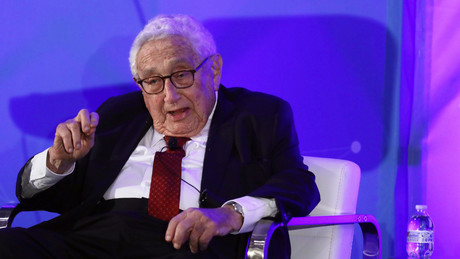
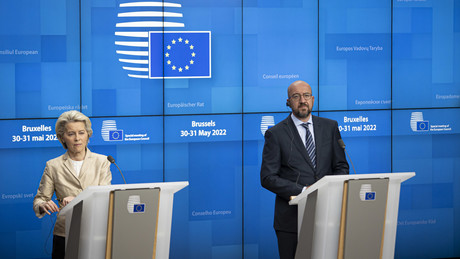 Quelle: Gettyimages.ru © Nico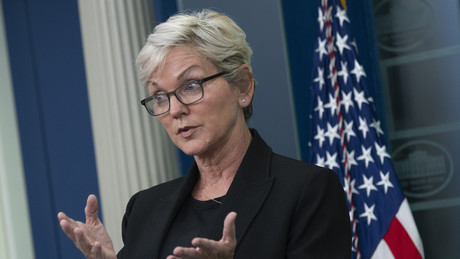


 Quelle: Gettyimages.ru © Ibrahim Erikan/Anadolu Agency via


 Quelle: Gettyimages.ru © Ed
 Quelle: www.globallook